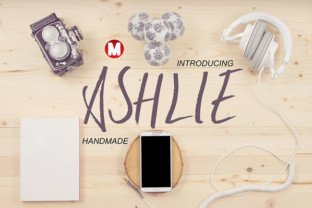
Ashlie Font: Handmade Charm for Makers
Sitting at my workbench late last Tuesday, surrounded by half-cut vinyl sheets and the faint scent of soy wax, I realized my candle labels were missing something essential. The product itself was perfect—a hand-poured lavender and sage blend—but the typography on the test print felt cold and mass-produced. It lacked the warmth of the handmade process. That is when I opened my design software and selected Ashlie. Watching the letters flow across the screen, with their delicate swashes and organic rhythm, instantly transformed the label from a simple sticker into a story. This is the power of choosing the right typeface; it bridges the gap between a raw material and a finished, cherished product.
Bringing Personality to Product Packaging
For those of us running small creative businesses, packaging is often the first physical touchpoint a customer has with our brand. Ashlie is a beautiful handmade font that feels inherently personal, making it an ideal choice for boutique packaging and product labeling. When I applied it to my candle line, the script didn't just spell out "Lavender Sage"; it evoked the feeling of a slow, intentional lifestyle. The visual personality of Ashlie strikes a difficult balance: it is elegant enough for luxury goods but retains a playful, approachable charm that prevents it from feeling stuffy or overly formal.
This versatility extends far beyond candles. If you are creating custom stickers or jar labels, the fluid nature of this script font adds a layer of perceived quality. Customers often equate thoughtful typography with product care. When designing for curved surfaces like mugs, tumblers, or cosmetic jars, Ashlie’s natural baseline variation mimics real handwriting, helping the text settle organically onto the product rather than looking stamped on. For makers selling at craft fairs or through online marketplaces, this distinction matters. It signals that every detail, down to the lettering, has been considered with intention.
Elevating Wedding Stationery and Invitations
One of the most frequent requests in my studio involves wedding stationery, where typography carries significant emotional weight. Ashlie shines brilliantly in this category because it reads as romantic without being illegible. I recently used it for a suite of save-the-dates and welcome signs, and the result was a cohesive editorial look that felt modern yet timeless. Unlike some display fonts that sacrifice readability for style, Ashlie maintains clear letterforms even when scaled up for signage or down for place cards.
When working on invitation mockups, I find that Ashlie works best for names, dates, and short sentimental phrases rather than dense logistical paragraphs. It serves as a stunning focal point that draws the eye, while leaving space for supporting details. For fellow stationery designers, this means you can create a hierarchy where Ashlie acts as the hero element, guiding the reader through the information effortlessly. Its handmade aesthetic pairs exceptionally well with textured paper stocks, linen cardstock, and vellum overlays, enhancing the tactile experience of the invitation suite.
Practical Tips for Cutting Machines and Vinyl
As a Cricut and Silhouette user, I know the anxiety of watching a blade drag through intricate script. Not all creative fonts are cut-friendly, but Ashlie has proven reliable for vinyl projects when handled correctly. Here are practical considerations I have learned through trial and error:
- Weld Your Letters: Always ensure your script is welded or united before cutting. Ashlie’s connecting strokes are designed to flow, but if the machine treats each letter as a separate object, you will end up with disjointed pieces. Use the weld tool in your cutting software to create one continuous cut line.
- Mind the Swashes: The decorative alternates and ligatures included with Ashlie are gorgeous, but they can be fragile in small vinyl decals. If you are making car decals or water bottle stickers, opt for the standard characters or use thicker stroke weights to prevent peeling.
- Test Cut First: Before committing to a full sheet of premium vinyl, run a test cut on scrap material. Adjust your pressure and speed settings specifically for script fonts, as the varying line thickness requires different blade dynamics than block letters.
- Weeding Strategy: Because Ashlie has delicate interior loops, use a fine-point weeding tool and work slowly. Rushing can tear the thin connections between letters.
Digital Downloads and Printable Wall Art
Beyond physical merchandise, Ashlie is a powerhouse for digital product creators. In the realm of printable wall art and planner pages, typography is the entire product. I have used this typeface to design inspirational quote prints and monthly calendar headers, finding that its authentic handwritten vibe resonates deeply with buyers looking for cozy, personalized decor. The font translates beautifully to digital formats, maintaining its crisp edges and nuanced curves whether viewed on a tablet or printed at home.
For template creators, Ashlie offers excellent commercial utility. Whether you are designing editable Canva templates, social media graphics, or digital planners, this font adds instant value. It helps differentiate your listings in saturated markets by providing a distinct visual identity. However, it is crucial to verify the specific licensing terms included with your purchase. Ensure you have the appropriate commercial license if you plan to sell end products featuring the font, especially for digital downloads where the font file itself might be embedded or distributed. Respecting intellectual property protects both the type designer and your business reputation.
Mastering Font Pairings for Brand Consistency
While Ashlie is captivating on its own, professional design relies on effective font pairing to create legible, balanced layouts. As a display font, it demands a supportive partner that provides contrast without competing for attention. My go-to strategy is pairing Ashlie with a clean, geometric sans serif font for body copy and pricing information. The simplicity of a sans serif allows the intricate details of the script to breathe, ensuring that essential details like ingredients, addresses, or product descriptions remain easy to read.
Alternatively, for a more traditional or vintage aesthetic, Ashlie pairs wonderfully with a classic serif font. This combination works particularly well for heritage brands, bakery packaging, or historical-themed event stationery. The key is to avoid pairing Ashlie with another highly decorative script, as this creates visual clutter and reduces readability. Think of Ashlie as the lead vocalist; the supporting fonts should be the rhythm section, steady and reliable, allowing the melody to soar. This approach ensures your brand identity remains consistent across business cards, website headers, Instagram captions, and product tags.
Checking Technical Specs Before You Create
Before diving into your next big project, take a moment to explore the full capabilities of the Ashlie file. Many handmade fonts include hidden gems like alternate characters, ligatures, and multilingual support that can elevate your design from good to exceptional. Accessing OpenType features in programs like Illustrator, Photoshop, or even newer versions of Cricut Design Space allows you to customize the flow of words, avoiding awkward spacing or repetitive letter shapes.
Also, confirm the file formats available. Having access to OTF, TTF, and WOFF files ensures you can use Ashlie across desktop design software, mobile apps, and web platforms seamlessly. For sellers creating SVG-style designs for cutting machines, check if pre-welded SVG files are included, as this saves significant preparation time. Understanding these technical assets upfront streamlines your workflow and prevents frustration during production. Ultimately, Ashlie is more than just a collection of vectors; it is a creative tool that, when understood and applied thoughtfully, brings genuine heart and craftsmanship to everything you make.